Work Design Magazine

SGA
Architecture | Planning | Interior Design | VDC | Branded Environments
Work Design Magazine
SGA, a national, multi-disciplinary firm whose work spans architecture, interior design and master planning for life sciences, academic, mixed-use and commercial clients, today announced that as part of AIA’s Project Delivery Symposium, it will present a high-powered panel discussion on Artificial Intelligence’s Impact in Architecture at AIA’s Project Delivery Knowledge Community Symposium, scheduled for March 7th at 2:15pm.
SGA Partner Michael Schroeder, CCM, will be joined by Peter Botelho, Senior VDC/BIM Manager, Dimeo Construction; and Antonio Furgiuele, Associate Professor, School of Architecture & Design at Wentworth Institute of Technology. SGA Chair Al Spagnolo, AIA, NCARB, will moderate the AI virtual panel.
“Artificial intelligence, or AI, will revolutionize the design and architecture world in the near future. It has already started to impact our industry,” said Mr. Schroeder. “SGA is a cutting-edge, technology-driven firm, and we are excited to present this AI panel to our AIA colleagues nationwide. Our panelists will talk about where we are seeing AI being used in today’s world and how it is being applied into the architecture industry.”
For more information, please click here.
The panelists for the AI & Architecture discussion are as follows:
Michael Schroeder, CCM
When Fast Company selected SGA as one of the Most Innovative Companies in 2018, the publication identified the firm’s capabilities in Virtual Design and Construction (VDC) as a key differentiator in scheduling and cost certainty. SGA Partner Michael Schroeder played an instrumental role in attaining this honor, leading the growth and development of the discipline since 2014. VDC is a proven delivery method that utilizes a combination of people, process, and technology. By bringing together the design team, construction managers, and subcontractors early in the planning phase, VDC uses the power of intelligent collaboration to design and build to clients’ goals and objectives. At the beginning of every commission, Michael onboards the project team and hosts an Execution Success Planning session, during which participants determine the most effective methods of delivery. Other pillars of his methodology include co-location of the development, design, and construction partners; bespoke project dashboards; and a variety of team building initiatives.
Al Spagnolo, AIA, NCARB
An eminent figure in the architectural profession, Al is founder and Chairman of SGA. Since establishing the firm in 1991, he has led its efforts to balance design excellence with responsible pragmatism, enhance the public realm, apply the latest technological advances and promote environmental conservation. A registered architect in 13 states, he is an active member of the AIA, BSA, NCARB, the National Organization of Minority Architects, and the Urban Land Institute. He also serves as a guest lecturer at Wentworth Institute of Technology and Boston Architectural College.
Peter Botelho
Peter, a technologist and Sr. VDC manager at Dimeo Construction Company, has spent the last nine years in the construction industry navigating how Dimeo can leverage and demonstrate the benefits of VDC to improve construction practices. He was formerly Director of BIM & IT at Vision 3 Architects, where he led the integration of BIM into the design practice. With over 25 years of industry experience, Peter is responsible for shaping how VDC brings optimal benefits to construction and various project deliveries and lifecycle management. In addition, he uses his IT background to pursue the benefits of machine learning and AI for the creation and advancement of best practices related to the integration of BIM-enabled technologies. Peter has also spoken at AGC BIMForum in 2017 and is a past member of significant committees from the Construction Institute, University of Hartford and US Institute of Building Documentation.
Antonio Furgiuele
Antonio Furgiuele is an architect, educator, and scholar, whose work explores the history and theory of the architecture of data and information. His current research project, “Towards an Adversarial Architecture,” investigates design methods that transform the built environment to influence AI technologies. Antonio is an Associate Professor of Architecture at Wentworth Institute of Technology. He has taught at MIT, Pratt Institute, The City College of New York, Columbia University, and Parsons. He was a Research Fellow at the University of Wisconsin, Milwaukee (2014-16) and at the MacDowell Colony (2017). He has a BArch from Syracuse University and a master’s degree in History, Theory & Criticism of Architecture from MIT.
The online symposium is part of AIA’s Project Delivery Knowledge Community Symposium scheduled for March 7-9, 2023.
About AIA
Founded in 1857, AIA consistently works to create more valuable, healthy, secure, and sustainable buildings, neighborhoods, and communities. Through more than 200 international, state, and local chapters, AIA advocates for public policies that promote economic vitality and public wellbeing. AIA provides members with tools and resources to assist them in their careers and business as well as engaging civic and government leaders and the public to find solutions to pressing issues facing our communities, institutions, nation, and world. Members adhere to a code of ethics and conduct to ensure the highest professional standards.
ARCAT
SGA, a national, multi-disciplinary firm whose work spans architecture, interior design and master planning for life sciences, academic, mixed-use and commercial clients, today announced Lauren Gauthier, AIA, MCPPO, has joined the firm as Director of Architecture for SGA’s Academic team.
Ms. Gauthier, who brings more than 10 years of architecture and design experience to SGA, is an experienced designer, planner, and registered architect with a focus on strategic planning and design in the academic realm, especially independent schools, and higher education.
“We’re excited to welcome Lauren to our growing team of talented architects and designers in our Boston office,” said SGA CEO and Partner Adam Spagnolo. “Her experience and knowledge in design and programming of 21 st -century learning facilities, student housing, community gathering spaces, and campus master planning will help to better serve our academic clients. We’re looking forward to working with Lauren.”
Ms. Gauthier comes to SGA after working for several major architectural firms where she worked on many prominent academic projects, including Coburn Hall at the University of Massachusetts, Lowell; Snell Experiential Library at Northeastern University; Sterling Chemistry Lab at Yale University; Middlesex School’s Theater and Performing Arts Center; The Pike School’s master plan; and the Fessenden School Science Center in Newton, MA, among others.
“SGA’s impeccable reputation in the marketplace and their expertise in academic facilities, life sciences, and corporate interior projects attracted me to the firm,” said Ms. Gauthier. “The synergies between these key typologies and opportunities in the academic realm are very exciting. I am thrilled to join SGA and am looking forward to working with their clients to create student-centric meaningful spaces.”
Ms. Gauthier holds a Bachelors of Architecture from the College of Architecture, Art, and Planning at Cornell University. Her professional affiliations include the American Institute of Architects, Boston Society of Architects, and Society of College and University Planning.
Beyond LEED
With LEED becoming standard for most commercial buildings, the next frontier in sustainable design is achieving net zero. FORUM – a new ultra-modern life sciences development in Boston Landing that broke ground this fall – is designed to have net zero operational carbon upon completion, aligning with Lendlease’s Mission Zero initiative and Ivanhoé Cambridge’s commitment to achieve net zero carbon by 2040.

Building with Purpose
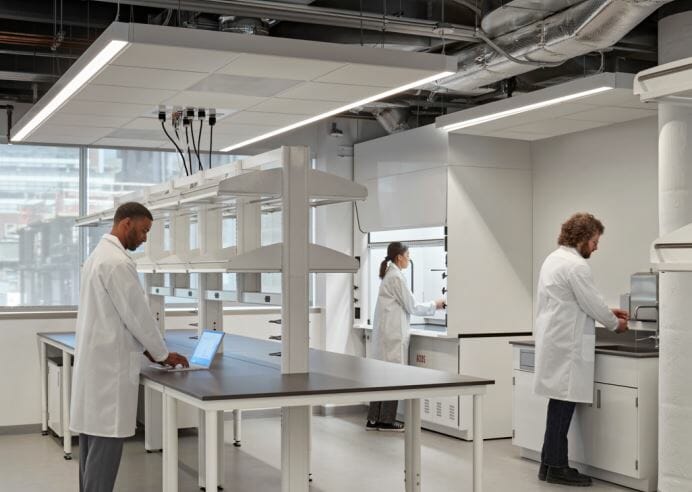
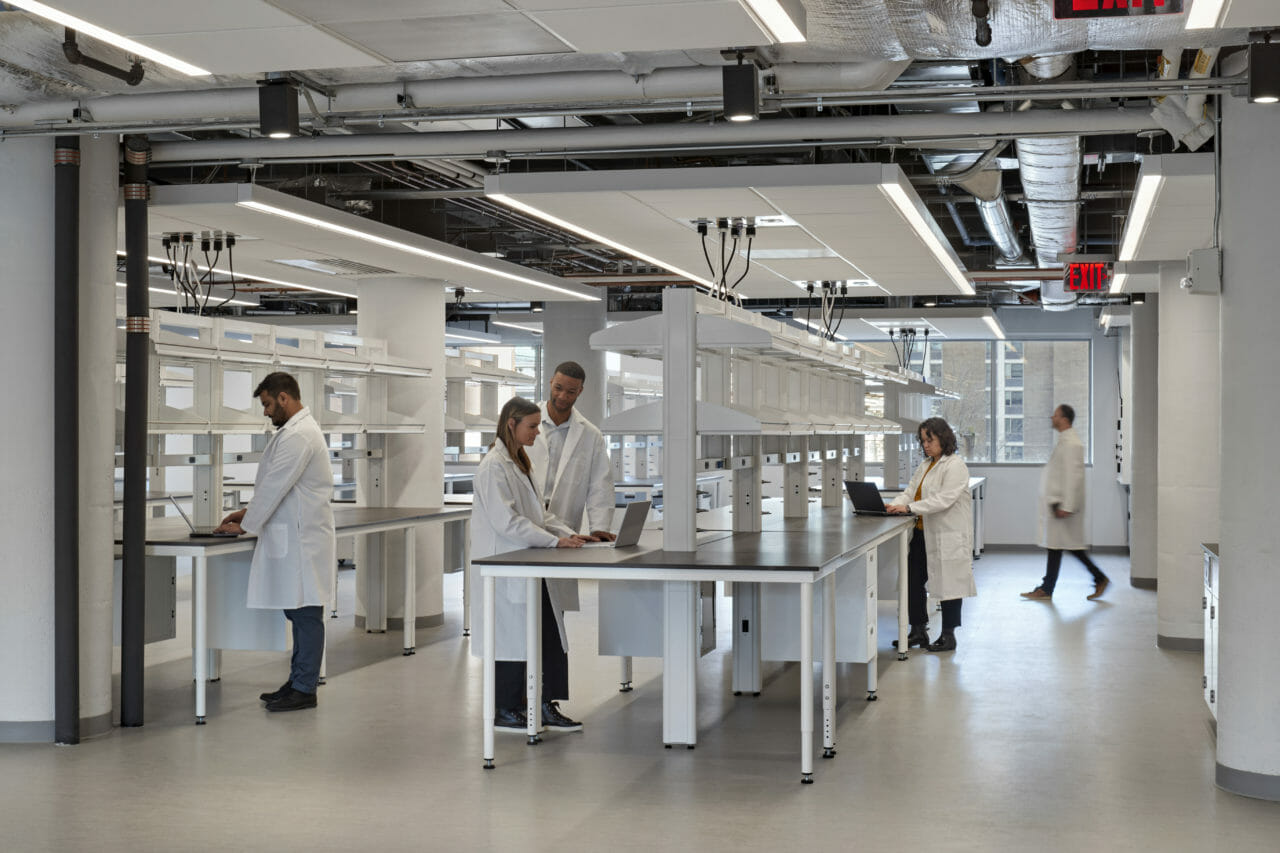
More purpose-built buildings are coming to fruition than ever before, particularly in the booming Life Sciences market, which has a specific set of spatial needs. This past September, SGA celebrated the opening of Boynton Yards: the first purpose-built Class A lab building in Somerville, MA. Understanding the need for flexible lab space, the building features column-free floor plates – offering tenants room to grow and redesign their space as needed – as well as high ceilings and accessible multi-tenant shaft space for chemical piping and exhaust systems.
Office Conversions
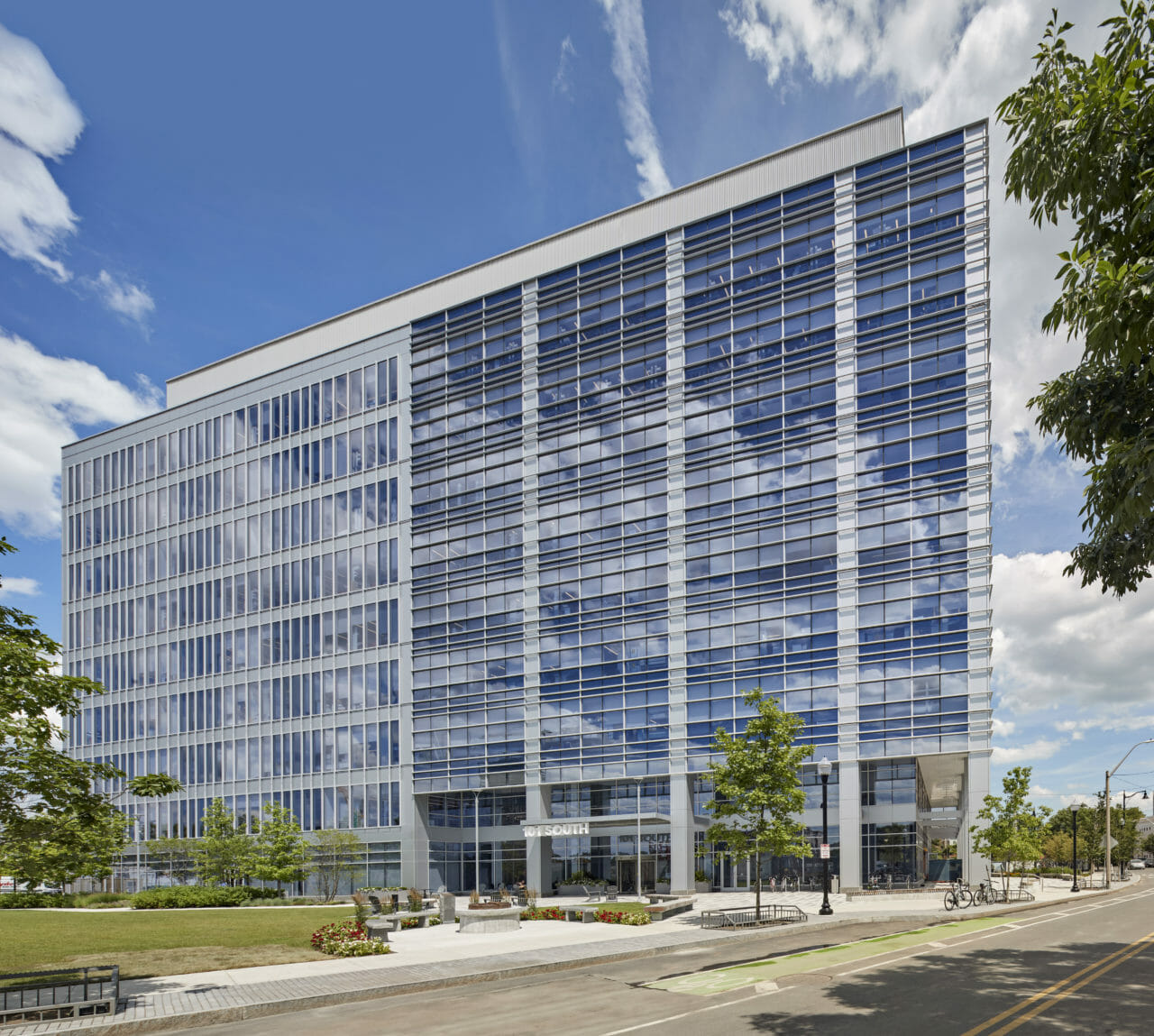
According to CBRE, the national office vacancy rate reached a nearly 30-year-high of 17.1% in Q3 2022 as the pandemic-induced rise of remote work has lowered office demand and occupancy rates. While this may seem bleak, it also offers an opportunity to convert underutilized space, which is what SGA accomplished with 95 Greene Street. Previously occupied by Merrill Lynch, SGA transformed the eight-story building into Jersey City’s first lab-ready office building that sets an example for life sciences development in dense urban environments like NYC.
Virtual Design & Construction
Virtual design and construction is on the rise as architects are asked to deliver more complex buildings with shorter schedules while remaining on time and on budget. Utilizing the firm’s VDC arm, SGA was able to complete a new, four-story building for the Kraft Group in just six months, opening in time for the 2022 NFL season. Key to this was the firm’s proprietary SGA Dashboard, which allowed the team to make decisions in real-time when faced with constant construction challenges such as supply chain constraints, shifting timelines and project changes.

Speculative Design
Part of a new era of leasing strategies, speculative design addresses the demand for move-in ready spaces from tenants. Completed in September, Oxford Properties tapped SGA to design a 32,219 SF speculative office suite on the fourth floor of its 22-story, LEED-Gold certified office tower in Boston. With the modern workplace evolving, SGA designed a flexible, scalable, and hospitality-focused environment that masterfully balances the wide spectrum of personal, team, spatial, and technological needs of today’s workers.

Lab Manager
E-Architect
Global Construction Review
Interior Design
Boston Real Estate Times
High Profile
Boston Real Estate Times
By: Brooks Slocum + Adam Spagnolo
A surge of private and public funding is redrawing the commercial Life Sciences map.
Whereas biomedical and pharmaceutical innovation has historically clustered in Greater
Boston, San Francisco and the Research Triangle, investments in commercial Life Sciences
facilities have overflown to emerging markets and clusters throughout the nation. A key
consideration to attracting Life Sciences tenants is understanding market maturity and its
impact on the potential facility types needed by growing companies. Owners and
developers are simultaneously looking to SGA to navigate this evolving landscape.
Real estate organizations know to engage SGA early in their life sciences journeys
because there are many subcategories of laboratory— and in this capital-intensive realm,
there is an advantage in making flexible buildings that can accommodate different science
types. It is even more critical to leverage SGA’s expertise because we can predict clearly
what the science will be in an emerging market.
SGA advises investors to understand what the firm refers to as the Market Maturity
Pipeline, which centers on the various facility types tenants in the Life Sciences market
may require, from basic research to corporate headquarters to packaging and distribution.
Market maturity is distinct from company maturity, which is also distinct from product
maturity. The three move independently, though a start-up with a new project can mature
all three at the same time.
Programming distinctions depend on a market’s stage of emergence. Accelerators
and incubators have to come first when a metropolitan area is entirely new to Life
Sciences; SGA often advises real estate organizations to position properties as incubators
and accelerators, which have to come when nurturing local business. These spaces may
require less robust mechanical and structural infrastructure versus more mature facilities
such as cGMP. Understanding the different infrastructure requirements enables an owner
or developer to better market a property that closely aligns with the potential needs of
prospective tenants. There is also an alternate path, which is when a large mega-company
moves into an area previously not involved in biopharma to take advantage of an educated
but untapped potential employee base, either in research or manufacturing.
In a more robust market, where startup companies have progressed to later stages
of R&D, SGA advises clients to embrace the greater infrastructure and specialization that
corresponds to process development and pilot manufacturing. In fact, making a lab space
extremely flexible and adaptable generally means lots of infrastructure to accommodate
anything which might happen, while more specific labs can be built “lighter.” In addition,
SGA has developed techniques for pivoting a building’s program toward office uses—or,
conversely, to heavier R&D uses—as the facility and tenant needs evolve.
Irrespective of location, speculative real estate for Life Sciences companies is itself
emerging. The idea that there are perfectly designed real estate spaces for every single
stage of a company’s Life Sciences journey is a relatively new phenomenon, and it has
enabled companies to spring into existence at a time when discovery and development are
faster than ever. Real estate’s limited track record demands a trusted partner, in turn, and
SGA ensures that facility programming and design correspond to the nuances of any given
market’s maturity.
Commercial Observer
Boston Business Journal
InsideHook
The Architect's Newspaper
Boston Real Estate Times
Boston Real Estate Times
Banker & Tradesman
Fast Company